Complete Checkup
Prevention is the key to your health

Complete Checkup
Prevention is the key to your health
Comfortable examination in 2 days
Expert-level diagnostics
Medical coordinator support
Personal recommendations
Why do you need a checkup?
A checkup is a comprehensive body examination that helps assess overall health, identify hidden risks, and get an individual action plan. Those who care about their health choose comprehensive checkups. Prevention is easier than treatment.
Investing in health is the best investment in the future

Listen to yourself
Get a checkup if you experience:
Constant fatigue
Weakness, drowsiness, loss of energy even after rest
Discomfort
Recurring or persistent pain without obvious cause
Chronic stress
Prolonged tension, sleep and recovery problems
Comprehensive Checkup
2 days
Private room
CHECKUP
Programs
World-class checkup in 9 best Moscow hospitals. Choose a clinic for your examination
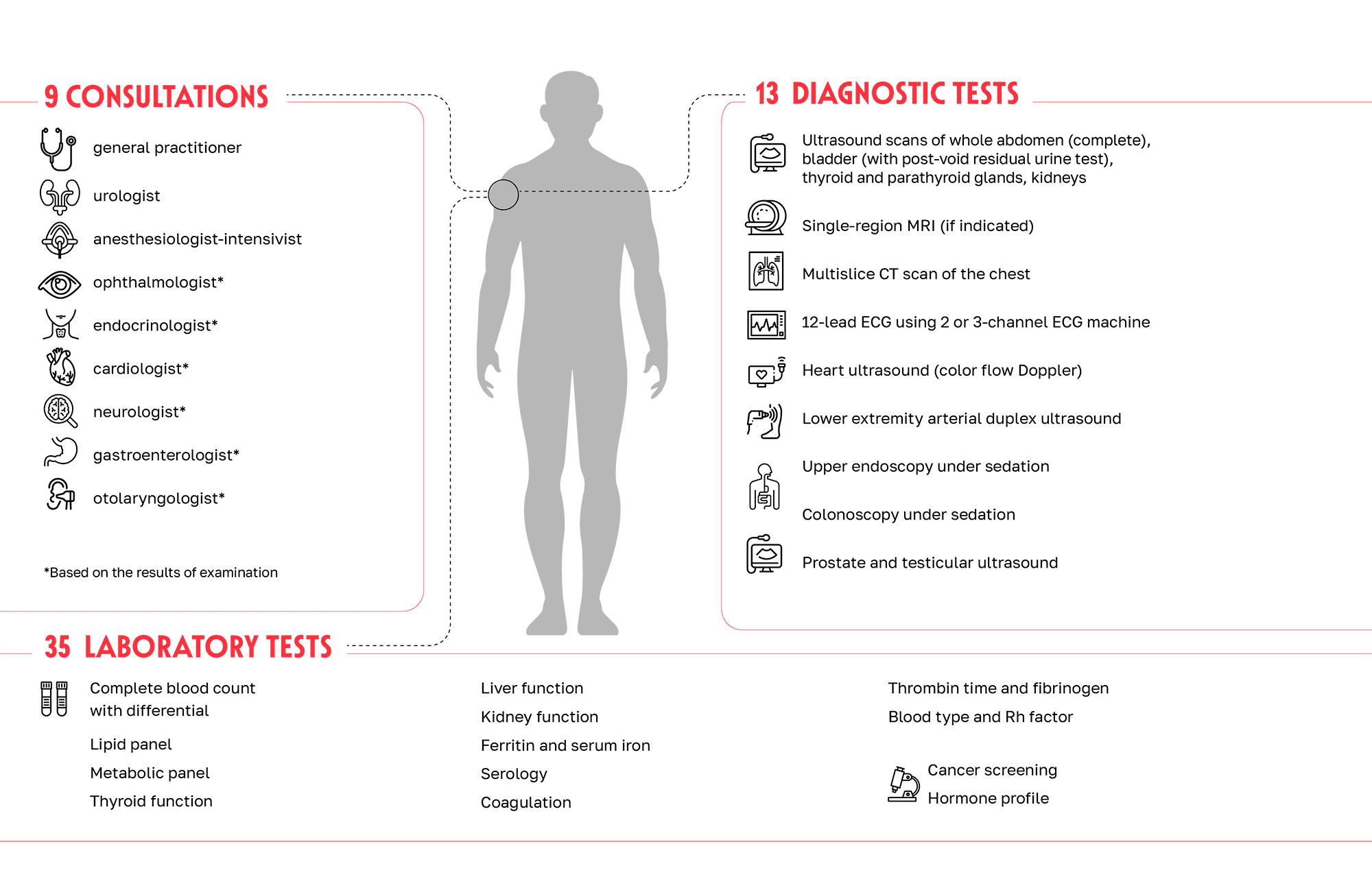
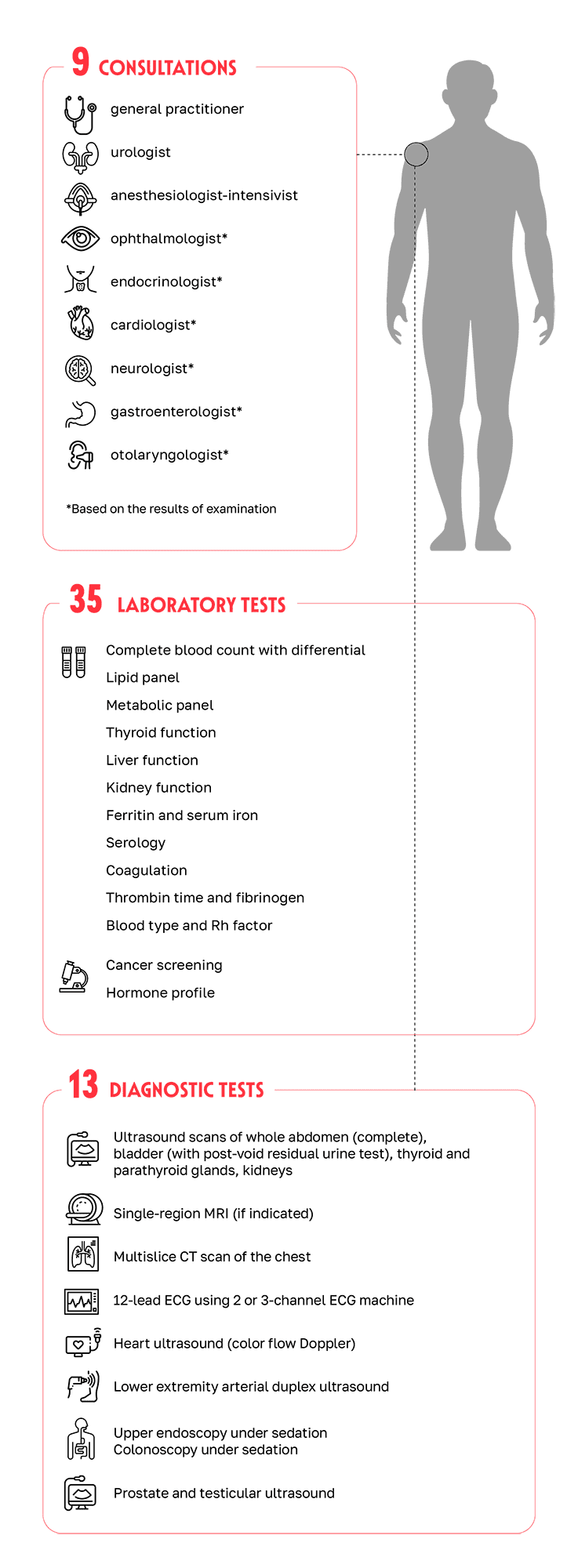
For men
Consultation with urologist and specialists
Male Health complex of analyses
Cancer screening
13 examinations: Prostate ultrasound, CT, brain MRI
Gastroscopy and colonoscopy under sedation
Sign up for a checkup to find out the price
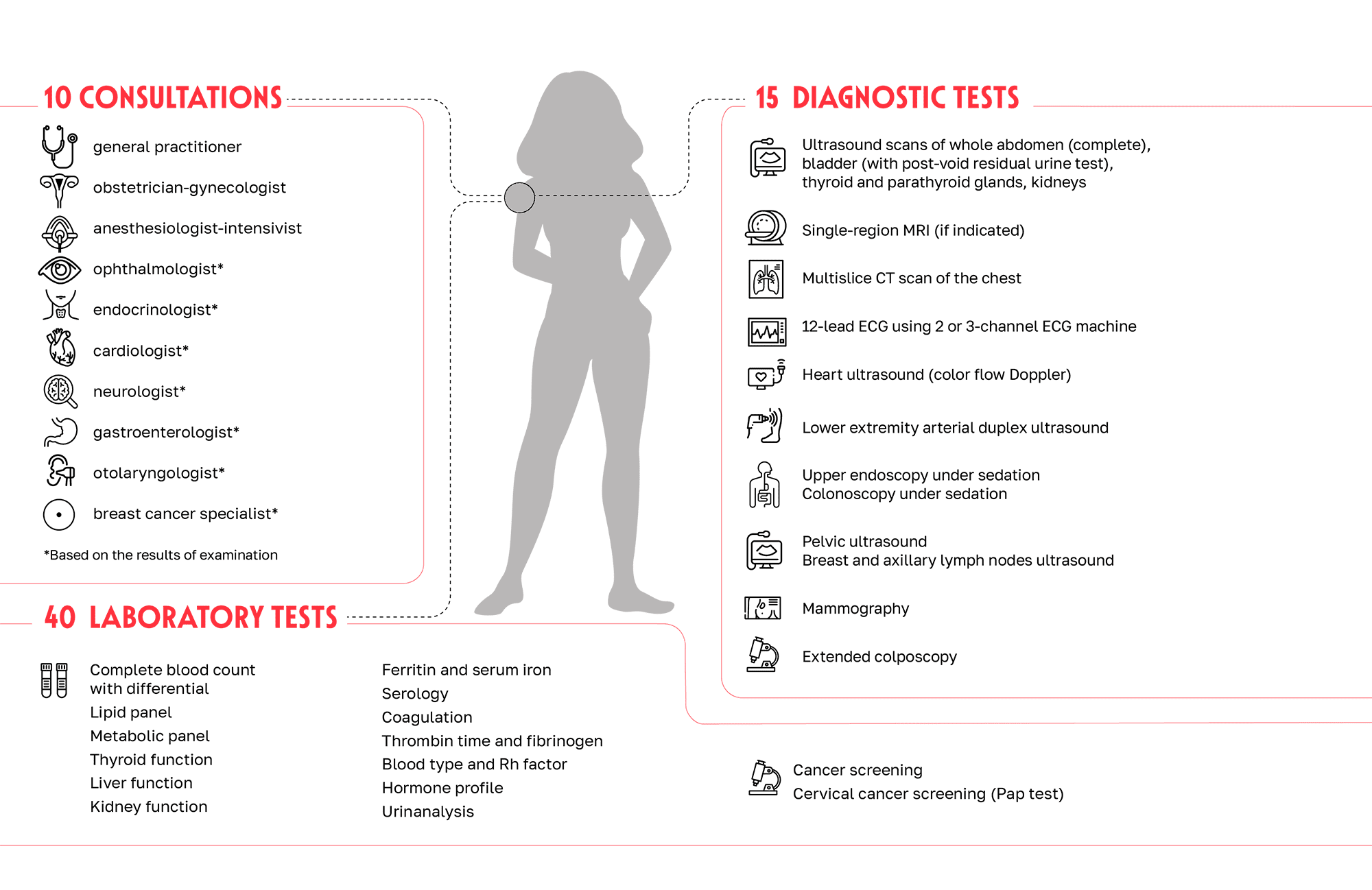
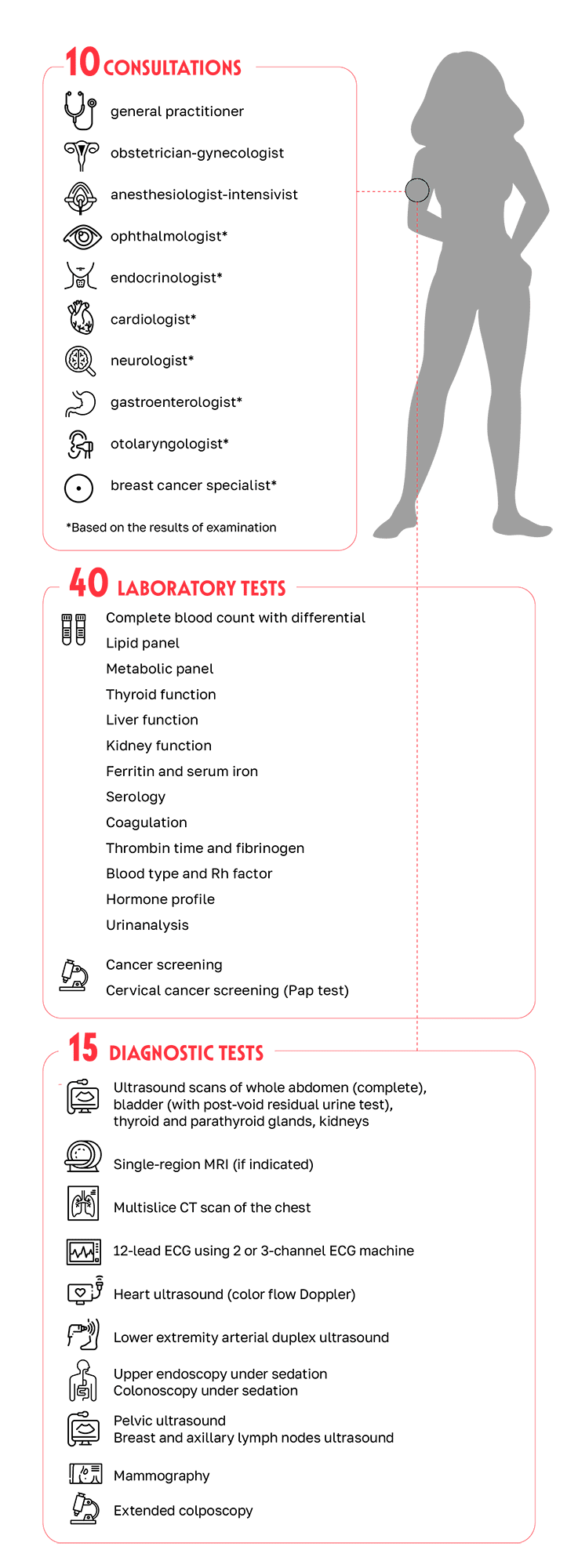
For women
Consultation with gynecologist and specialists
Women's Health complex of analyses
Cancer screening (including breast cancer)
15 examinations: Pelvic ultrasound, mammography, CT, MRI
Gastroscopy and colonoscopy under sedation
Sign up for a checkup to find out the price
HOW TO GET CHECKUP
Choose a clinic for your checkup in Moscow
Introduce yourself, submit personal and medical information, and choose date
Arrive at hospital, get settled in room and undergo checkup
Discuss results with the supervising doctor
Receive your personal plan for further treatment
Choose a clinic for your checkup in Moscow
Introduce yourself, submit personal and medical information, and choose date
Arrive at hospital, get settled in room and undergo checkup
Discuss results with the supervising doctor
Receive your personal plan for further treatment
Choose a clinic for your checkup in Moscow
Introduce yourself, submit personal and medical information, and choose date
Arrive at hospital, get settled in room and undergo checkup
Discuss results with the supervising doctor
Receive your personal plan for further treatment
Fast. Convenient. Reliable.
Choose a clinic
World-class checkup in 9 best Moscow hospitals. Choose a clinic for your examination
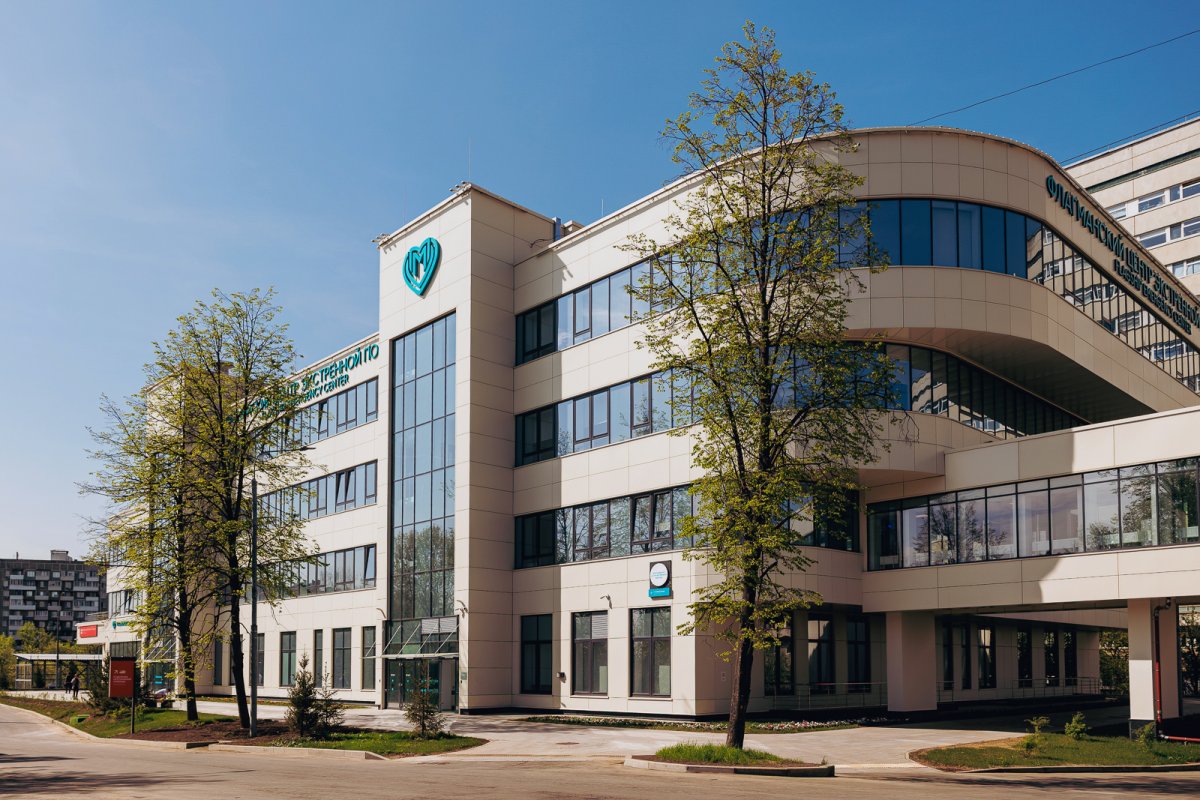
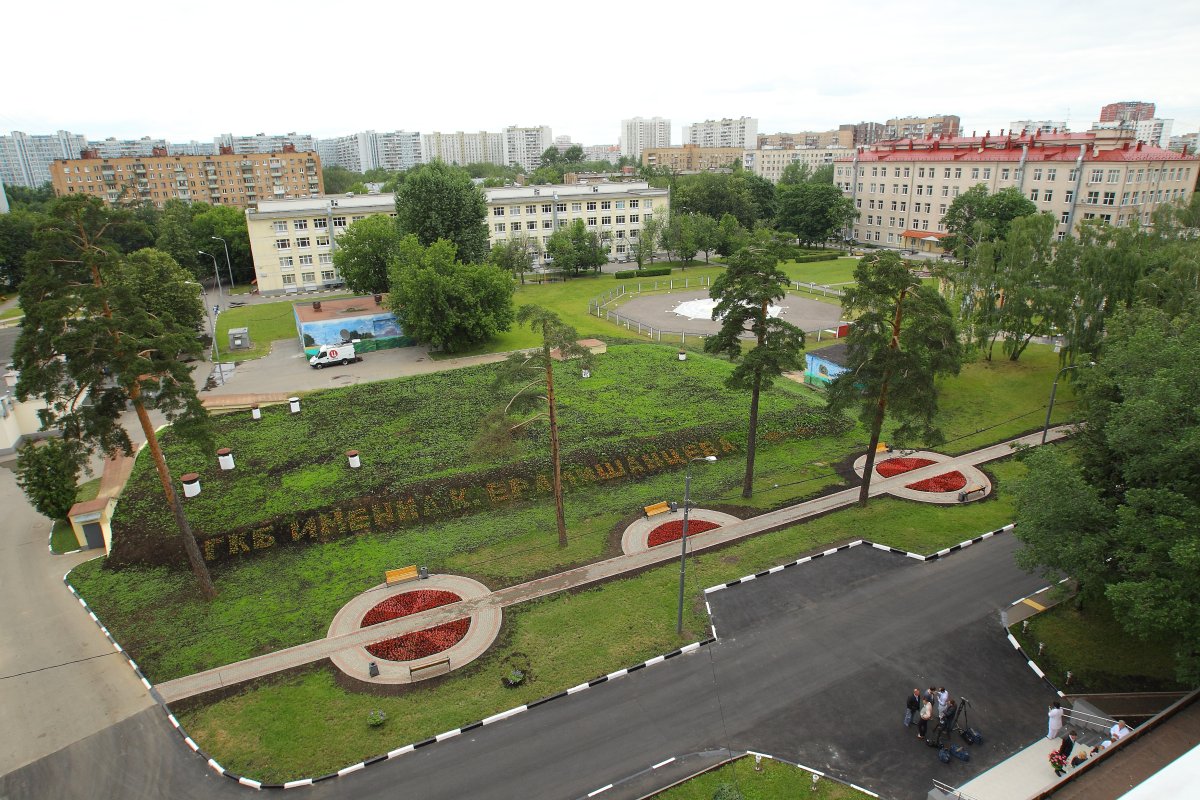
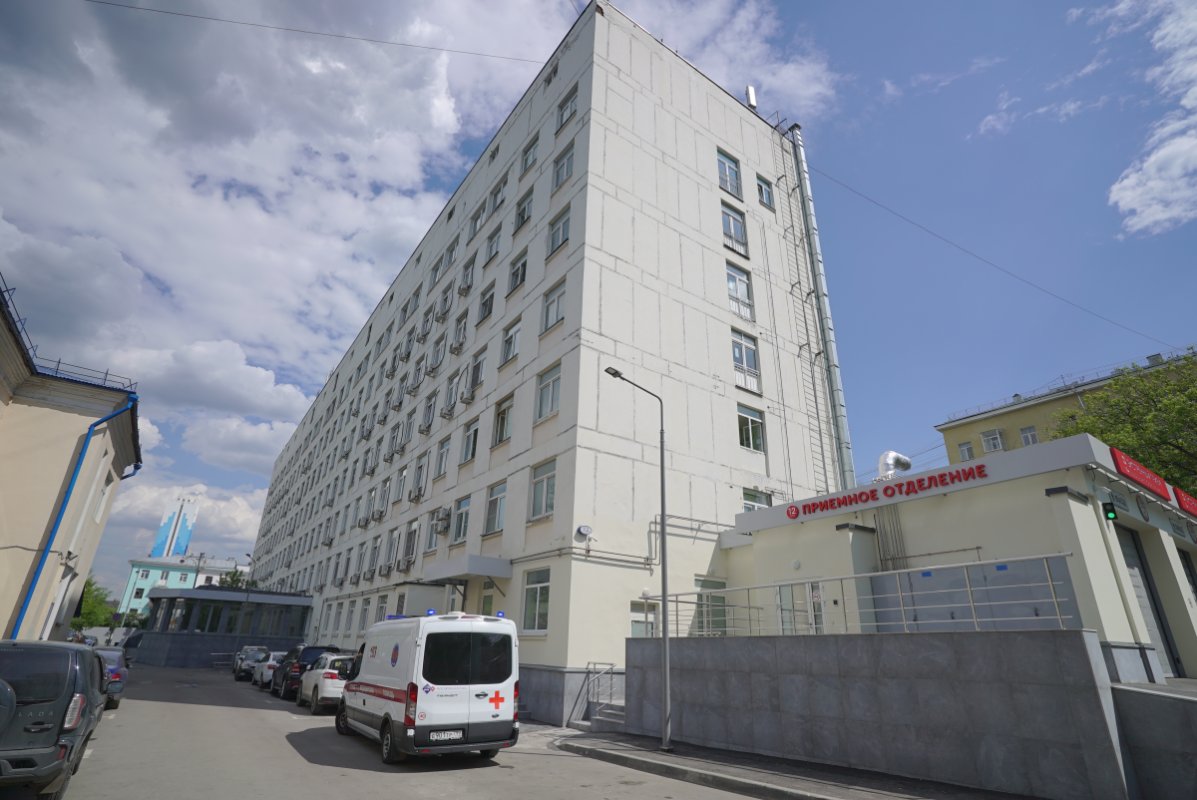


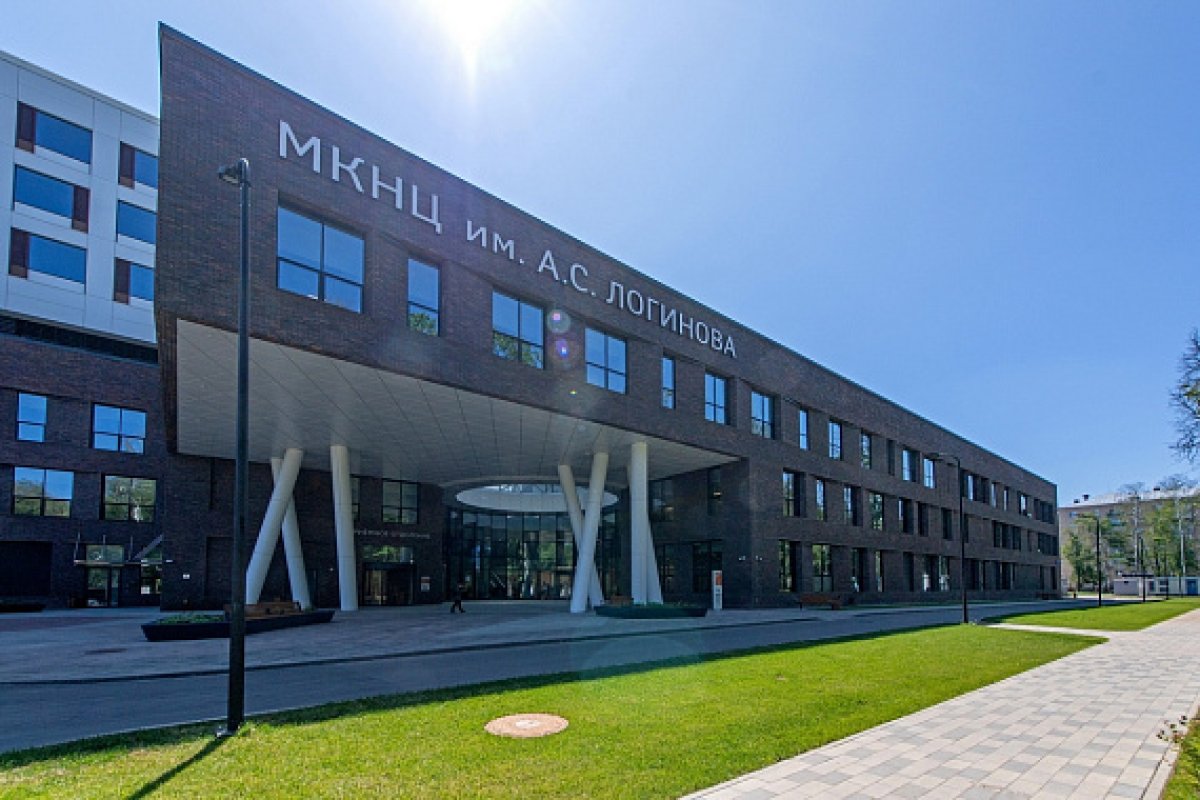
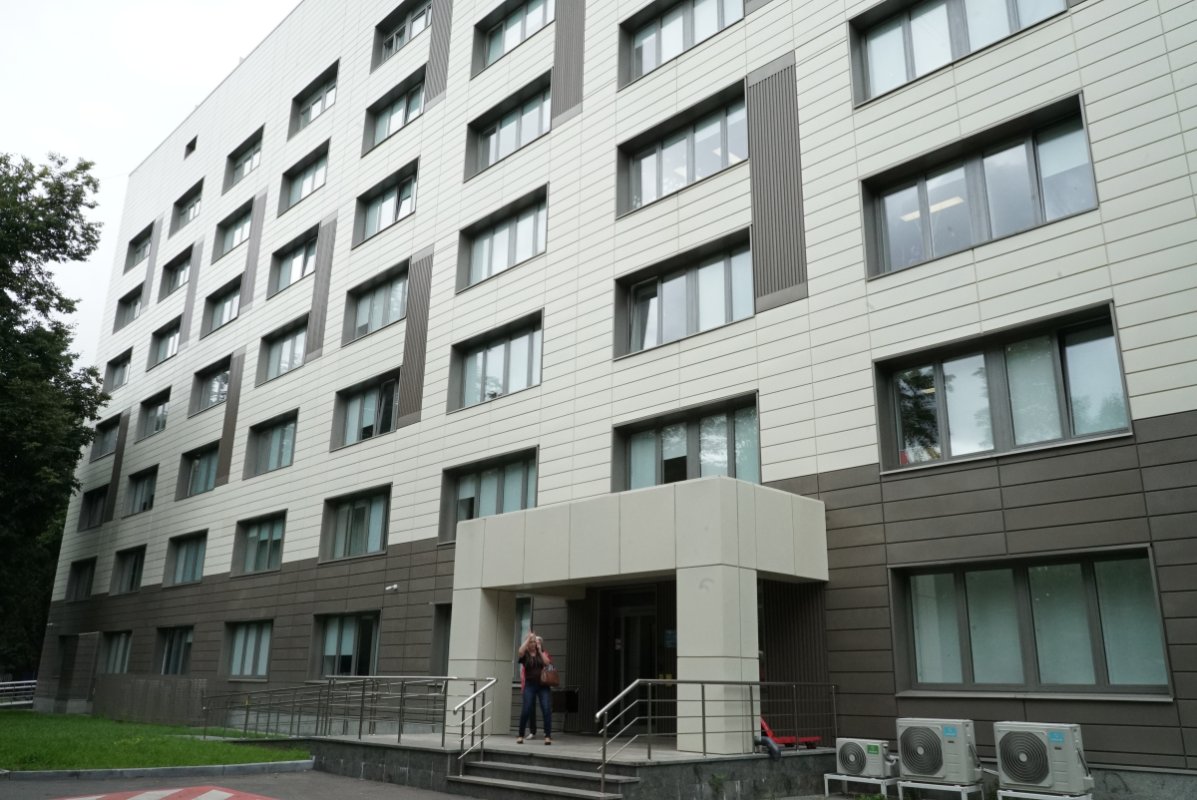

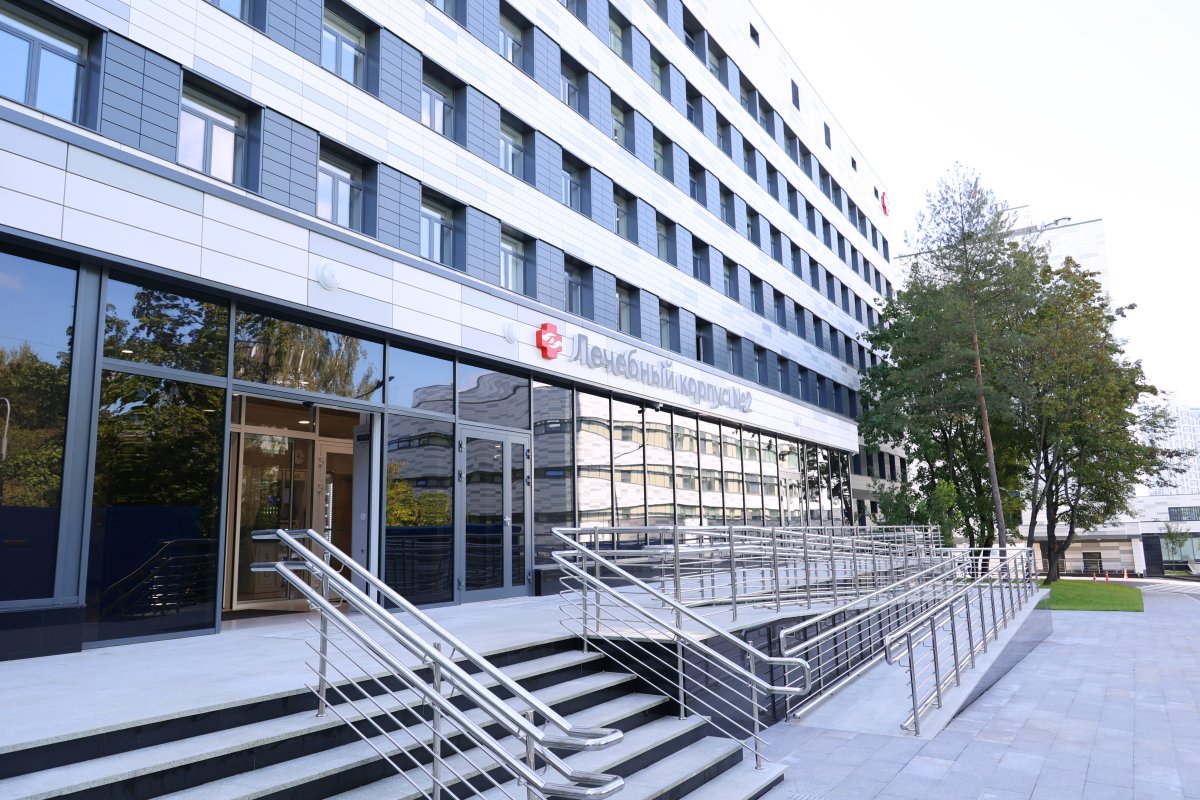
Fill out the form to book
FREQUENTLY ASKED QUESTIONS
Why undergo checkups in Moscow rather than Europe or UAE?
What does a typical day at the clinic look like? Do I have to navigate it on my own?
What about meals and accommodation?
What do I get once the examinations are complete? Just a bunch of papers with test results?
What should I do if the checkup finds out something serious?
How often should I undergo this checkup?
Can I bring someone with me?
Can I customize the program?
What is the difference between male and female checkups?
Are there any age restrictions?
Do I need a visa to get a checkup? How do I apply for a visa to Russia?
Is it possible to enter on a tourist visa or an e-visa?
What is included in the male checkup?
Mandatory consultations
- Initial appointment (examination, consultation) with a general practitioner
- Follow-up appointment (examination, consultation) with a general practitioner
- Initial appointment (examination, consultation) with a urologist
- Examination (consultation) by an anesthesiologist-resuscitator, initial
Consultations based on examination results and therapist referrals
- Initial appointment (examination, consultation) with a cardiologist
- Initial appointment (examination, consultation) with a gastroenterologist
- Initial appointment (examination, consultation) with a neurologist
- Initial appointment (examination, consultation) with an endocrinologist
- Initial appointment (examination, consultation) with an ophthalmologist
- Initial appointment (examination, consultation) with an otolaryngologist
- Daily examination by a general practitioner with monitoring and care by nursing staff in the inpatient department
Laboratory diagnostics
- Complete blood count (CBC) extended (32 parameters, leukocyte formula)
- Urinalysis (color, transparency, specific gravity, pH, urine volume, protein, glucose, urobilinogen, bilirubin, ketone bodies, blood reaction, microscopic examination of urine sediment)
- Prothrombin time determination in blood or plasma
- Thrombin time determination in blood
- Blood clotting time determination
- Activated partial thromboplastin time (APTT) determination
- Fibrinogen level test in blood
- Alanine aminotransferase (ALT) level test in blood
- Aspartate aminotransferase (AST) level test in blood
- Glucose level test in blood
- Triglycerides level test in blood
- Urea level test in blood
- Low-density lipoprotein cholesterol (LDL-C) level test in blood
- High-density lipoprotein cholesterol (HDL-C) level test in blood
- Cholesterol level test in blood
- Thyroglobulin antibodies (TgAb) test in blood serum
- International normalized ratio (INR) determination
- Total bilirubin level test in blood
- Direct bilirubin level test in blood
- Indirect bilirubin level determination in blood
- Creatinine level test in blood
- Potassium level test in blood
- Sodium level test in blood
- Gamma-glutamyltransferase (GGT) level test in blood
- Ionized calcium level test in blood
- Alkaline phosphatase (ALP) level test in blood
- HIV antibodies test (HIV-1 and HIV-2) in blood
- Syphilis antibodies test (Treponema Pallidum) by enzyme immunoassay (EIA) in blood serum
- Hepatitis B surface antigen (HBsAg) test in blood (screening)
- Hepatitis C antibodies test (IgM, IgG) in blood (screening)
- Blood group (A, B, O), Rh factor, erythrocyte antibodies, subgroups determination (Kell antigen test)
- 1,25-OH Vitamin D test in blood
- Ferritin level test in blood
- Serum iron level test in blood
- Free triiodothyronine (Free T3) test in blood
- Thyroid peroxidase antibodies (Anti-TPO) test
- Free thyroxine (Free T4) test in blood
- Thyroid-stimulating hormone (TSH) test in blood
- Testosterone level test in blood
- Prostate-specific antigen (PSA) test in blood
- Free prostate-specific antigen (Free PSA) test in blood
- Alpha-fetoprotein (AFP) test in blood serum
- CA 19-9 antigen test in blood
- CA 72-4 antigen test in blood
- Carcinoembryonic antigen (CEA) test in blood
- Glycated hemoglobin (HbA1c) test in blood
- Total calcium level test in blood
- Vitamin B12 (cyanocobalamin) test in blood
- Uric acid level test in blood
- Folic acid level test in blood serum
Instrumental diagnostics
- Anthropometric measurements
- ECG (12-lead) with physician report
- Echocardiography with Doppler and color flow mapping
- Multislice computed tomography of the chest
- Magnetic resonance imaging of one anatomical area
- Ultrasound examination of abdominal organs (comprehensive)
- Ultrasound examination of the bladder with residual urine determination
- Transrectal ultrasound of the prostate (TRUS)
- Ultrasound examination of the scrotum
- Ultrasound examination of the thyroid and parathyroid glands
- Ultrasound examination of the kidneys
- Duplex/triplex ultrasound of lower limb arteries and veins (comprehensive)
- Esophagogastroduodenoscopy (EGD)
- Total intravenous anesthesia up to 1 hour
- Colonoscopy
What is included in the female checkup?
Mandatory consultations
- Initial appointment (examination, consultation) with a general practitioner
- Follow-up appointment (examination, consultation) with a general practitioner
- Initial appointment (examination, consultation) with an obstetrician-gynecologist
- Examination (consultation) by an anesthesiologist-resuscitator, initial
Consultations based on examination results and therapist referrals
- Initial appointment (examination, consultation) with a cardiologist
- Initial appointment (examination, consultation) with a gastroenterologist
- Initial appointment (examination, consultation) with a neurologist
- Initial appointment (examination, consultation) with an endocrinologist
- Initial appointment (examination, consultation) with an ophthalmologist
- Initial appointment (examination, consultation) with an otolaryngologist
- Appointment (examination, consultation) with an oncologist-mammologist
- Daily examination by a general practitioner with monitoring and care by nursing staff in the inpatient department
Laboratory diagnostics
- Complete blood count (CBC) extended (32 parameters, leukocyte formula)
- Urinalysis (color, transparency, specific gravity, pH, urine volume, protein, glucose, urobilinogen, bilirubin, ketone bodies, blood reaction, microscopic examination of urine sediment)
- Prothrombin time determination in blood or plasma
- Thrombin time determination in blood
- Blood clotting time determination
- Activated partial thromboplastin time (APTT) determination
- Fibrinogen level test in blood
- Alanine aminotransferase (ALT) level test in blood
- Aspartate aminotransferase (AST) level test in blood
- Glucose level test in blood
- Triglycerides level test in blood
- Urea level test in blood
- Low-density lipoprotein cholesterol (LDL-C) level test in blood
- High-density lipoprotein cholesterol (HDL-C) level test in blood
- Cholesterol level test in blood
- Thyroglobulin antibodies (TgAb) test in blood serum
- International normalized ratio (INR) determination
- Total bilirubin level test in blood
- Direct bilirubin level test in blood
- Indirect bilirubin level determination in blood
- Creatinine level test in blood
- Potassium level test in blood
- Sodium level test in blood
- Gamma-glutamyltransferase (GGT) level test in blood
- Ionized calcium level test in blood
- Alkaline phosphatase (ALP) level test in blood
- HIV antibodies test (HIV-1 and HIV-2) in blood
- Syphilis antibodies test (Treponema Pallidum) by enzyme immunoassay (EIA) in blood serum
- Hepatitis B surface antigen (HBsAg) test in blood (screening)
- Hepatitis C antibodies test (IgM, IgG) in blood (screening)
- Blood group (A, B, O), Rh factor, erythrocyte antibodies, subgroups determination (Kell antigen test)
- 1,25-OH Vitamin D test in blood
- Ferritin level test in blood
- Serum iron level test in blood
- Free triiodothyronine (Free T3) test in blood
- Thyroid peroxidase antibodies (Anti-TPO) test
- Free thyroxine (Free T4) test in blood
- Thyroid-stimulating hormone (TSH) test in blood
- Follicle-stimulating hormone (FSH) test in blood
- Luteinizing hormone (LH) test in blood
- Progesterone level test in blood
- Prolactin level test in blood
- Testosterone level test in blood
- Alpha-fetoprotein (AFP) test in blood serum
- CA 15-3 tumor marker test in blood
- CA 19-9 antigen test in blood
- CA 125 antigen test in blood
- CA 72-4 antigen test in blood
- Carcinoembryonic antigen (CEA) test in blood
- Glycated hemoglobin (HbA1c) test in blood
- Total calcium level test in blood
- Vitamin B12 (cyanocobalamin) test in blood
- Uric acid level test in blood
- Folic acid level test in blood serum
- Cytological examination of gynecological smear (including uterine aspirate)
- Cytological examination of cervical biomaterial (Papanicolaou staining)
Instrumental diagnostics
- Anthropometric measurements
- ECG (12-lead) with physician report
- Echocardiography with Doppler and color flow mapping
- Multislice computed tomography of the chest
- Magnetic resonance imaging of one anatomical area
- Ultrasound examination of abdominal organs (comprehensive)
- Ultrasound examination of the bladder with residual urine determination
- Ultrasound of mammary glands, soft tissues and regional lymph nodes
- Mammography
- Ultrasound examination of pelvic organs (comprehensive)
- Ultrasound examination of the thyroid and parathyroid glands
- Ultrasound examination of the kidneys
- Duplex/triplex ultrasound of lower limb arteries and veins (comprehensive)
- Esophagogastroduodenoscopy (EGD)
- Total intravenous anesthesia up to 1 hour
- Colonoscopy
- Extended colposcopy