Intrauterine treatment of congenital diaphragmatic hernia
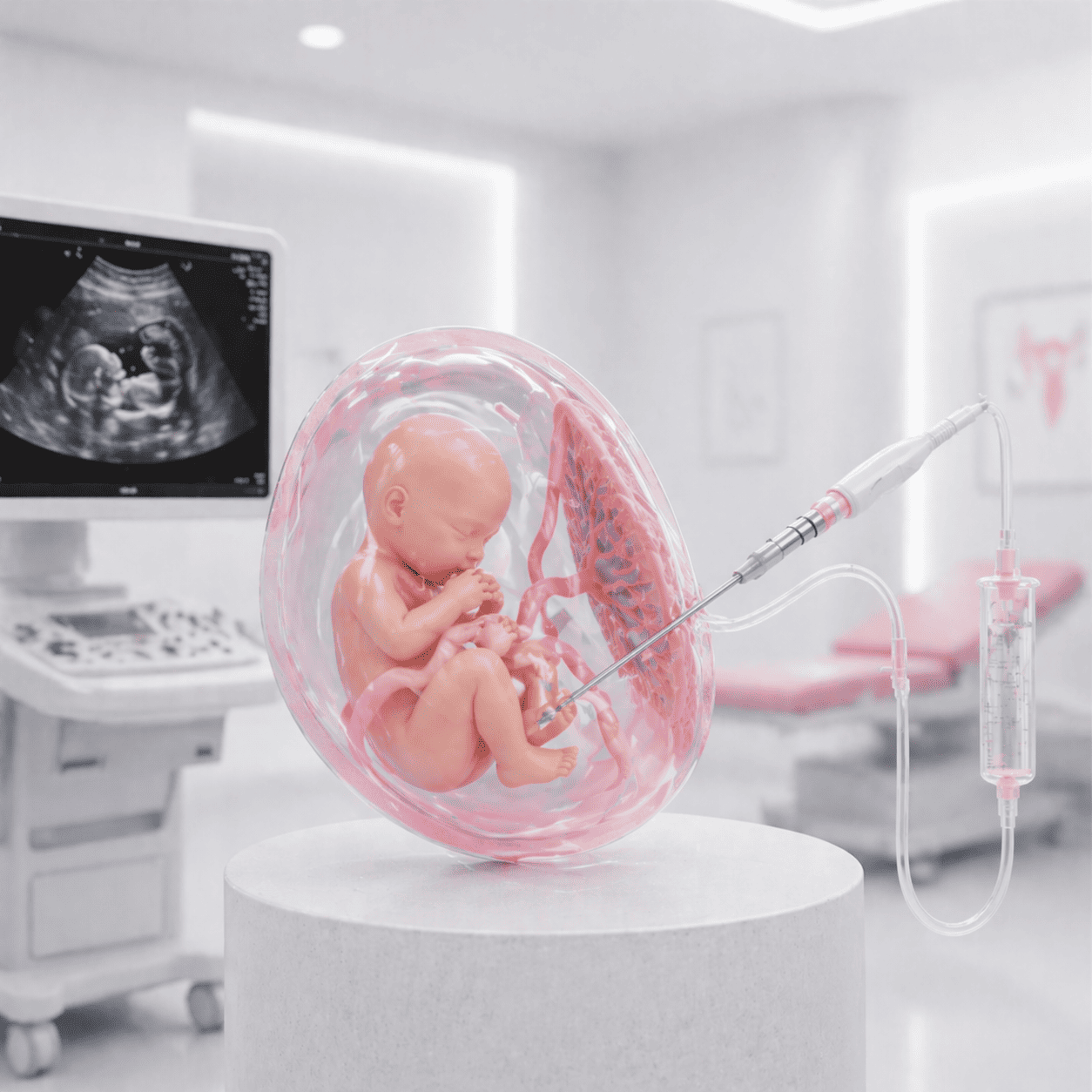
Intrauterine treatment of congenital diaphragmatic hernia is is a surgical procedure in which a fetoscope is inserted through the abdominal wall into the uterus and then into the mouth of the fetus to place an inflatable balloon to temporarily block the fetal trachea. The blockage allows lung fluids to build up behind the balloon, encouraging airway expansion and lung growth, thereby creating space for the displaced organs.
Intrauterine treatment of congenital diaphragmatic hernia
Intrauterine treatment of congenital diaphragmatic hernia is is a surgical procedure in which a fetoscope is inserted through the abdominal wall into the uterus and then into the mouth of the fetus to place an inflatable balloon to temporarily block the fetal trachea. The blockage allows lung fluids to build up behind the balloon, encouraging airway expansion and lung growth, thereby creating space for the displaced organs.
Intrauterine treatment of congenital diaphragmatic hernia is a surgical procedure in which a fetoscope is inserted through the abdominal wall into the uterus and then into the mouth of the fetus to place an inflatable balloon to temporarily block the fetal trachea. The blockage allows lung fluids to build up behind the balloon, encouraging airway expansion and lung growth, thereby creating space for the displaced organs. Indications for the procedure include severe isolated diaphragmatic hernia with an observed to expected lung area to head circumference ratio of less than 25 percent, herniation of liver tissue into the thoracic cavity, and 26 to 28 gestation weeks.
Choose where to be treated
Select one of the hospitals providing the service:

Which doctor do you want to be treated by?
Select one of the doctors



Which room do you want to stay in?
Select one of the rooms